Arabic has a reputation for being one of the hardest languages in the world. A completely different script, sounds that don’t exist in English, and a grammar system that operates on a root-based logic unlike anything most Western learners have encountered before. It’s easy to see why people feel intimidated before they even begin.
But here’s what that reputation misses: Arabic is also one of the most systematic and internally consistent languages you can learn. Once the logic clicks, things start to fall into place faster than you’d expect. The key is knowing where to start and not trying to tackle everything at once.
This is the first thing most beginners don’t know to ask. Arabic isn’t one monolithic language in practice. Modern Standard Arabic (MSA) is the formal written language used across media, literature, and official contexts throughout the Arab world.
Then there are regional dialects, Egyptian, Levantine, Gulf, Moroccan, each with their own vocabulary and spoken patterns.
For most learners, starting with MSA makes sense. It’s understood across all Arabic-speaking regions, it’s what formal courses teach, and it gives you a solid foundation to build any dialect on top of later. If you have a specific country or community in mind, mentioning that to your instructor early helps tailor the focus.
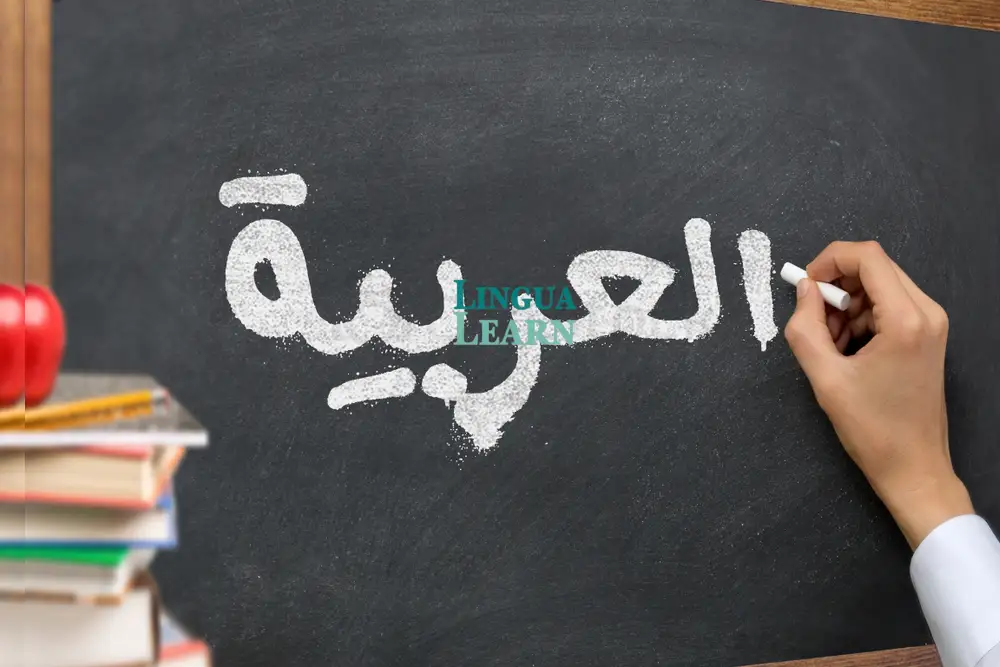
Arabic script looks complex, but it’s actually an alphabet of 28 letters, and most learners can read it within a few weeks of focused practice.
Yes, it reads right to left, and yes, most short vowels aren’t written, which takes getting used to. But the script itself is learnable, and getting comfortable with it early pays off enormously.
Trying to learn Arabic through romanized transliteration is a tempting shortcut that most experienced teachers advise against. It creates habits that become obstacles later, and it cuts you off from the vast majority of written Arabic resources.
Arabic has several sounds that simply don’t exist in English, including the emphatic consonants, the guttural sounds produced at the back of the throat, and letters like ع (ayn) and غ (ghayn) that take deliberate practice to produce correctly.
These sounds matter more in Arabic than mispronunciations typically do in European languages, because in Arabic, the wrong sound can change the meaning of a word entirely.
Working with a qualified teacher from the beginning, someone who can hear what you’re doing and correct it in real time, is particularly valuable here.
One of the things that makes Arabic genuinely fascinating once you get past the initial learning curve is its root system.
Almost all Arabic words are built from three-letter roots, and once you recognize a root, you can often guess the meaning of related words you’ve never seen before.
For example, the root ك-ت-ب (k-t-b) relates to writing. From it comes كتب (kataba, he wrote), كتاب (kitaab, book), مكتب (maktab, office or desk), and كاتب (kaatib, writer).
Learning one root effectively gives you a cluster of vocabulary at once, which makes the language build on itself in a satisfying way.
Arabic learners have a particular tendency to spend a long time on reading and grammar before attempting to speak. The script feels like a prerequisite, then the grammar, then vocabulary. By the time speaking practice begins, months have passed.
The more effective approach is to run speaking practice in parallel with everything else from day one. Even simple phrases, basic greetings, introducing yourself, asking questions, keep the spoken language active while the written and grammatical foundations are being built.
Arabic is rated by the Foreign Service Institute as a Category 4 language, the hardest category for English speakers, with around 2,200 hours to professional proficiency. That’s a real commitment, and it’s worth going in with honest expectations.
What it doesn’t mean is that Arabic is out of reach. It means the journey is longer, and consistency matters even more than it does with easier languages. Thirty to forty-five minutes of focused daily practice, over months and years, is what gets people there.
If you’re ready to start that journey with proper guidance, Lingua Learn’s Arabic courses connect you with qualified instructors who can walk you through everything from the script to real conversation, at a pace that works for you.