
Japanese has a reputation for being one of the hardest languages in the world for English speakers to learn. That reputation is not wrong, but it is also frequently misapplied. If your goal is professional fluency, reading novels, negotiating contracts, watching the news without subtitles, yes, that is a multi-year undertaking. But if your goal is to travel to Japan with confidence, or simply to start learning as a beginner without a fixed deadline, the picture looks very different.
This guide separates those two goals clearly, because the approach that works for “I want to get around Tokyo and Kyoto next spring” is not the same approach that works for “I want to eventually read manga in the original Japanese.” Both are valid. They just require different starting points.
This sounds obvious, but it changes everything about how you should spend your study time, and it is the single biggest factor in whether your studying feels productive or like a waste of effort.
If you are preparing for a trip, your priority is spoken communication in a narrow set of situations: greetings, ordering food, asking directions, navigating trains, and handling basic transactions. You do not need grammar depth or broad vocabulary. You need a small, highly relevant toolkit that you can deploy under pressure.
If you are a beginner with no immediate deadline, learning because you are curious, because you love Japanese media, or because you are building toward a longer-term goal like working or studying in Japan, your approach should be broader and more foundational from the start.
You have the luxury of building things in the right order rather than skipping ahead to what is immediately useful. Most of this guide applies to both groups, but where the paths diverge, both are addressed.
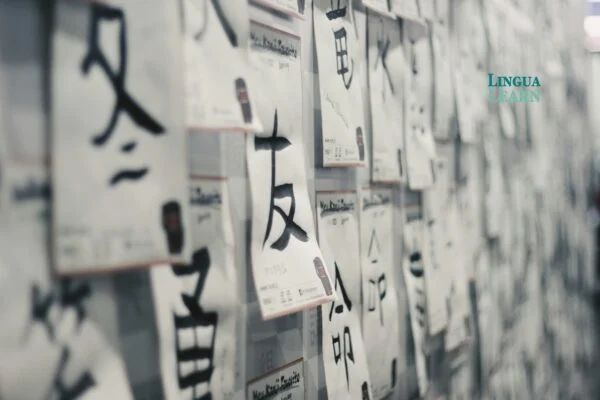
Japanese uses three writing systems: hiragana, katakana, and kanji. The first two are phonetic syllabaries, each character represents a sound, not a meaning, and together they cover roughly 100 characters. Kanji, by contrast, are characters borrowed from Chinese that represent meaning, and there are thousands of them in everyday use.
For a beginner, the single highest-value first step is learning hiragana and katakana. Both can realistically be learned in one to two weeks with focused daily practice. Once you can read them, train station signs, menus, and product labels stop being abstract shapes and start being readable text, even if you do not yet understand every word.
This matters more than it might seem. Relying on romanized Japanese (Japanese words spelled with the Latin alphabet) creates a crutch that becomes harder to remove the longer you depend on it.
Romanization also obscures pronunciation in ways that cause bad habits; certain sounds get flattened or mispronounced because the Latin spelling doesn’t represent them accurately. Reading the actual scripts from the beginning avoids this entirely.
Hiragana is used for native Japanese words and grammatical elements. Katakana is used primarily for foreign loanwords, onomatopoeia, and emphasis, which is useful to know, because a surprising number of katakana words are recognizable once you can read them.
Words like kohi (coffee), takushi (taxi), and resutoran (restaurant) are borrowed from English and written in katakana specifically because they are foreign in origin.
Spaced repetition is the most efficient method for locking these characters into memory, apps built around this system schedule reviews at increasing intervals so that characters you find difficult appear more often, while ones you’ve mastered appear less frequently.
Writing characters out by hand, even briefly, also reinforces recognition in a way that screen-based recognition alone does not.
Before diving into new material, it’s worth taking stock of what you already know, because the number is usually higher than people expect.
Words like sushi, karaoke, tsunami, origami, و karate are Japanese words used directly in English. On the flip side, a substantial portion of everyday Japanese vocabulary, particularly katakana words, comes from English.
This overlap gives you a real head start, especially for travel-relevant vocabulary. Many modern Japanese words for technology, food, and consumer goods are recognizable once you know how Japanese pronunciation adapts English sounds (for example, English words ending in consonants often gain a vowel sound at the end in Japanese).
If your trip is the motivating factor, the most efficient approach is to build vocabulary around the specific situations you will actually encounter, rather than working through a generic beginner curriculum that covers everything in roughly equal measure.
The situations that come up most often for travelers in Japan include greetings and basic courtesy phrases, ordering food and understanding menu items, asking for and understanding directions, navigating train stations and ticket machines, shopping and understanding prices, and handling emergencies or asking for help.
Within each of these categories, a relatively small set of words and phrases covers the overwhelming majority of real interactions. Flashcards, whether physical or app-based, are particularly effective here because you can build a custom deck focused entirely on your trip rather than working through someone else’s general-purpose list.
Ten to fifteen minutes a day with a focused travel deck builds a surprisingly functional vocabulary faster than most people expect.
A realistic timeline for travel-focused Japanese looks like this: in the first two weeks, you can have hiragana, katakana, and basic greetings down.
By one month, you should have the core phrases for food, transport, and shopping situations. By two months, you’re forming simple sentences, handling numbers, and able to ask for help when something goes wrong.
By three months of consistent practice, most travelers can get through the majority of situations they’ll encounter with reasonable confidence.
اقرأ أيضًا: Best Way to Learn a New Language: A Practical Guide That Actually Works
Japanese grammar is structured differently from English in ways that feel unusual at first but become intuitive with exposure. The most fundamental difference is word order: Japanese follows a subject-object-verb pattern, where English follows subject-verb-object.
Where English says “I eat sushi,” Japanese constructs the equivalent of “I sushi eat”, the verb comes at the end of the sentence.
For travelers, you do not need to study grammar deeply. What helps most is becoming comfortable with a handful of sentence patterns: how to form simple statements, how to ask yes/no and basic information questions, and how to use polite verb forms, which matter quite a bit in Japanese, where the level of politeness in your speech reflects social context.
For beginners without a travel deadline, grammar deserves more structured attention earlier on, because Japanese grammar patterns build on each other.
Getting comfortable with basic sentence structure early makes everything that follows, more complex sentences, different verb forms, conditional and conjectural expressions, considerably easier to absorb.
Kanji is the part of Japanese that intimidates beginners most, and for good reason, there are thousands of characters in everyday use, each with its own meaning, multiple possible pronunciations depending on context, and specific stroke order.
For travelers, the honest answer is that you do not need kanji. Getting comfortable with a few dozen high-frequency characters, the ones for exit, entrance, restroom, station, and a handful of others that appear constantly in public signage, is more than sufficient. Beyond that, hiragana and katakana will get you through almost everything you need to read.
For beginners building toward longer-term fluency, kanji deserves early attention, but with a specific approach. The most effective method recommended by experienced learners is to focus on the meaning of a character before worrying about its pronunciation, Japanese characters often have multiple readings depending on context, and trying to memorize all of them alongside the meaning from the start creates unnecessary overload.
Building visual stories or mnemonics for characters based on their shapes is also widely recommended, since many kanji are constructed from simpler components whose meanings combine logically.
The character for “book” or “origin,” for instance, visually resembles a tree with an extra stroke at its base, a small detail that becomes a memorable story rather than an abstract shape to memorize by repetition alone.
Kanji learning is a long-term project regardless of approach. Starting early and progressing gradually, a small number of new characters each week, reinforced through spaced repetition, produces far better results than attempting to cram large numbers of characters in bursts.
Of all the skills involved in learning Japanese, listening is the one beginners most often neglect, and the one that causes the most frustration later. It is entirely possible to build a solid vocabulary, understand grammar reasonably well, and still freeze completely when a native speaker responds to you in natural, fast-paced Japanese.
The issue is that textbook audio and app recordings are almost always slower, clearer, and more deliberately enunciated than real speech.
Natural Japanese, spoken at normal conversational speed, with casual contractions and regional variation, sounds noticeably different, and that gap needs to be closed through exposure, not through more vocabulary study.
Podcasts designed for Japanese learners are a good entry point, since they’re built around practical topics at a manageable pace.
As your comprehension improves, gradually shifting toward more natural content, Japanese YouTube channels, anime with Japanese subtitles, or shows aimed at native speakers, closes the gap between “Japanese I can understand when it’s slowed down for me” and “Japanese as it’s actually spoken.”
Even ten to fifteen minutes of daily listening, sustained over weeks, makes a measurable difference. The skill builds cumulatively, comprehension does not arrive suddenly, but it does arrive.
This is the area where the gap between travel-readiness and app-based learning becomes most obvious. Vocabulary apps and flashcard systems are excellent for recognition, being able to understand a word or phrase when you see or hear it.
But recognition and production are different skills, and a lot of learners discover this the hard way: they arrive in Japan having “learned” hundreds of words and phrases, only to freeze the moment someone speaks to them and a response is needed in real time.
Speaking is a skill that has to be practiced as speaking, there is no substitute. This means structured conversation practice, ideally with a native speaker who can correct pronunciation and phrasing in real time.
Even two or three short conversation sessions a week in the weeks leading up to a trip make a noticeable difference in how comfortable you feel when you actually need to use the language.
For beginners without a trip deadline, the same principle applies but with less urgency, speaking practice can be introduced gradually as vocabulary and grammar develop, but it should not be postponed indefinitely. Many learners wait until they “feel ready” to speak, and that feeling tends not to arrive on its own. It arrives through practice.
Lingua Learn offers structured Japanese courses for travelers and beginners alike, with flexible online lessons designed around your goals, whether that’s confidently navigating Japan on your next trip or building toward long-term fluency.